
Family-owned lawn care for Fort Wayne and northeastern IndianaCall 260-854-2727
Treat the right weed

Weed Control

Good weed control begins with identification, timing, and a lawn dense enough to compete for light and space.

When to look closer

Different weeds call for different timing.

Crabgrass is a warm-season annual grass. Dandelion, clover, and many other familiar lawn weeds are broadleaf plants. A product or timing that helps with one group may not solve the other.

  • Crabgrass appearing along hot edges or thin turf
  • Dandelions, clover, plantain, or other broadleaf weeds
  • Repeated weeds in compacted, thin, or poorly drained areas
  • A previous treatment that did not match the weed or growth stage
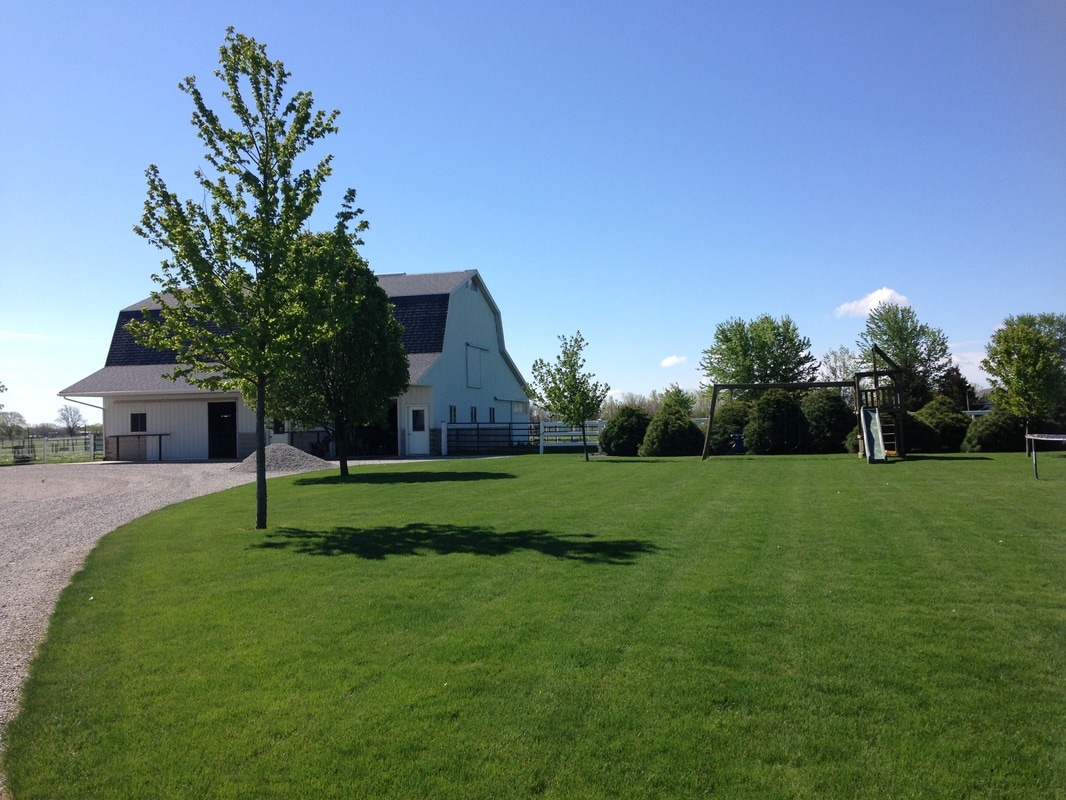
Dense green turf along a tree-lined drive
Our approach

Control the weed—and improve the competition.

Preventive timing matters for crabgrass because it germinates from seed each spring. Broadleaf weeds are usually addressed when they are actively growing and able to take up the treatment. Weather and the surrounding turf influence both strategies.

We also look at why weeds found an opening. A dense lawn mowed at an appropriate height is one of the best long-term defenses. Thin turf, scalping, compacted soil, and bare edges invite weeds back even after a successful treatment.

What the process looks like

Step 01

Identify the weed

We distinguish grassy weeds, broadleaf weeds, and look-alikes before deciding how to respond.

Step 02

Match the timing

Preventive and post-emergent controls work at different points in a weed’s life cycle.

Step 03

Treat with care

Applications are made for the target and current conditions, with instructions for watering, mowing, and normal use.

Step 04

Reduce the opening

We explain the turf-density, mowing, soil, or moisture issues that may be helping weeds return.

Want to go deeper? Read Purdue Extension’s crabgrass guidance from Purdue Extension.

Common questions

What homeowners ask about weed control.

Can every weed be controlled in one visit?

No. Weed species, maturity, weather, and turf condition all affect response. Some weeds require follow-up or a different seasonal strategy.

Why is there still crabgrass after using a preventer?

Thin turf, disturbed soil, application timing, weather, and gaps near pavement can all contribute. Crabgrass prevention greatly reduces pressure but is not a promise that no plant will emerge.

Does mowing height affect weeds?

Yes. Mowing too short weakens desirable turf and allows more light to reach weed seedlings. Appropriate height and sharp blades support a denser lawn.

Start with a conversation

Is weed control the right next step?

Tell us what you are seeing. We will help you sort through the symptoms and recommend a sensible next step.